- vera cherkasskikh
- View Portfolio
- Image 2 of 2
- Added 29 Jun 2007
- 304 Views
- 2 Comments
- Share This Image On...
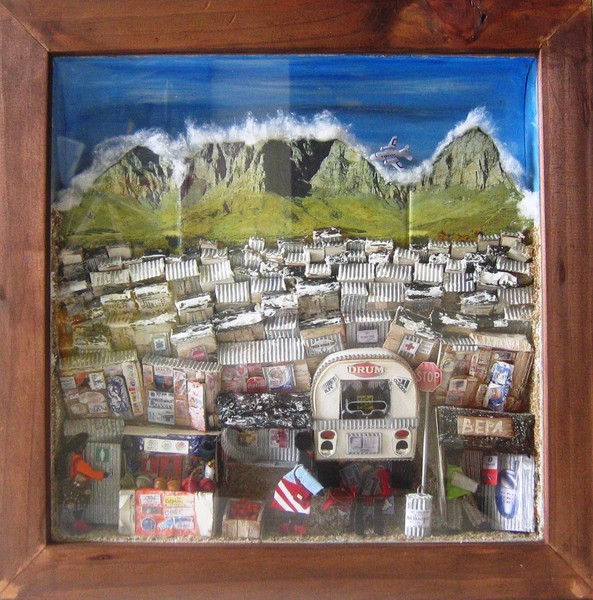
The History of Khayelitsha In the early 1980's the Apartheid government decided to move all 'legal' black people from existing townships to a new township. The government classified people as legal if they had had already lived in the area for ten years. The new township was called Khayelitsha which means 'New home'. At the same time the government planned to move all illegal people to Transkei, a homeland created in the eastern part of the country. People living in existing townships near Cape Town resisted this move. One community leader said that they would had to kill them first then move their bodies to Khayelitsha because that was the only way they will move there. Fighting broke out in townships between the government and people who lived there. This fighting caused people to move to Khayelitsha, saying they are forced to move to Khayelitsha because of the violence and moving to Khayelitsha was not their intention It was exactly what the government wanted them to do. In 1990 the population of Khayelitsha was estimated at 450,000 and unemployed at 80 per cent. Roughly 14 per cent lived in small core houses, 54 per cent in serviced shacks, and 32 per cent in unserviced ones. Hardly anyone had electricity and most inhabitats had to fetch water from taps. Social control was largely maintained by unofficial, unpopularly elected councils. Today Khayelitsha There are many different types of house in Khayelitsha. Some are permanent as they are built from bricks and others are built from scraps of sheet iron and timber. Most people living in Khayelitsha live in informal houses called 'imikhukhu'. These houses are not very comfortable, they leak when it rains, are hot during the day and cold during the night. A major problem with shacks is they are built very close together and allow fires to spread very rapidly through an area. Although some imikhukhu are serviced with electricity, the majority of people still use kerosene stoves for cooking and candles for lighting. The new government has begun to implement a housing programme. More Khayelitsha people have real houses. Although these houses are small(two roomed) they do noThere are no Supermarkets in Khayelitsha. People buy their food and other supplies from small shops called Spaza shops. These shops make a substantial contribution part of Khayelitsha's entrepreneurial growth. Buying Fruit and Vegetables The pictures show examples of where people living in Khayelitsha shop. Fruit and vegetables are often not fresh and cost more than in supermarkets. Spaza shops are also unhygenic as theyare not controlled by health regulations. Meat store Poor people eat some parts from the sheep's stomach or a cow's stomach. After killing the animal the intestines are and wash thoroughly before cooking them. They call this type of meat 'upenisi'. People also eat sheep heads. A cooked head is called a 'smiley'. They first take the hair off by putting the head on a fire. After that, they take them out and wash them. The heads are cooked in big drums and cut them in half and sell the sheep heads. The picture on the right shows a sheep head being cooked.t leak and can be extended.is home to half a million people. Barbers convert disused shipping containers into barbershops and hair salons. Containers provide a cheap secure room from which to work. The owners electrify the containers by connecting the electricity supply from their. To advertise they paint different hair styles on the outside walls. Inside their salons they have modern equipment such as, hair driers, combs and hot brushes. They also have sinks with warm water for washing hair. Township barbershops and salons are well supported by township people as they are seen to deliver a good service. Artists of Khayelitsha design and make ornaments for a living. The pictures show one artists work. He scultures different animal designs using mortar. Artists in Khayelitsha do not make much money as people who have money are afraid to travel into Khayelitsha. ince there are very few employment opportunities and formal shops in Khayelitsha people have to travel suburbs closer to Cape Town work and shop. They use taxis, buses and trains to travel. Traveling by trains is not safe because thieves steal from travellers. They would come to the trains carrying guns and big knives and search everyone in the train.They take their jewellery, wallets and sometimes even their clothes. Travellers who refuse to give them their jewellery face the risk of being stabbed. Women used to hide their money in their bras but thieves know about this so they hide it in their panties. They hide it by putting it in toilet papers and roll it up then put it in their panties. Traveling by taxi is also dangerous because the taxi drivers fight alot. Taxis often break down on the way to work and school and cause travellers to be late. Sometimes the taxi drivers do not wash they just get up and smell awful, sometimes they are drunk. It is also not safe traveling by buses because if you are sitting at the bus- stop the thieves would come and take your jewellery and money. If you try to scream they would stab you because they know that no one is going to do anything.
2 Comments
Lucia Stewart 27 Sep 2007
This is truly excellent Vera, fabulous art!!!Emily Reed 29 Jun 2007
Really cool! Great!